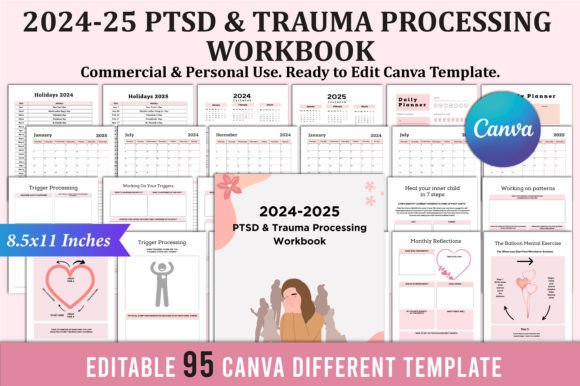
2024-25 PTSD Trauma Processing Workbook
The 2024-25 PTSD Trauma Processing Workbook is a powerful tool designed to support individuals on their journey toward healing and self-discovery. This comprehensive resource offers structured guidance for processing trauma, managing triggers, and fostering emotional resilience. With its blend of practical exercises and reflective prompts, the workbook serves as a valuable companion for those seeking to navigate the complexities of post-traumatic stress disorder (PTSD) with clarity and purpose.
What sets this workbook apart is its integration of creative and therapeutic elements. It provides a safe space for users to explore their experiences, track progress, and develop coping strategies. Whether you're a mental health professional, a creator looking for meaningful content, or someone personally working through trauma, the workbook offers adaptable tools that can be tailored to individual needs.
Key Features of the 2024-25 PTSD Trauma Processing Workbook
The 2024-25 PTSD Trauma Processing Workbook includes a variety of pages designed to address different aspects of trauma recovery. From daily planners to monthly calendars, the workbook ensures that users can maintain organization while focusing on their mental well-being. The inclusion of trauma-specific worksheets allows for in-depth exploration of personal experiences, helping users identify patterns and develop healthier responses.
One standout feature is the focus on trigger processing. The workbook guides users through understanding their triggers, exploring their origins, and developing effective coping mechanisms. This approach not only helps manage immediate reactions but also promotes long-term emotional growth. Additionally, the workbook includes sections on self-compassion, self-acceptance, and inner child healing, offering a holistic path to recovery.
How to Use the 2024-25 PTSD Trauma Processing Workbook
The 2024-25 PTSD Trauma Processing Workbook is designed for flexibility, making it suitable for a wide range of users. Whether you're using it independently or in conjunction with therapy, the workbook provides a structured yet personalized framework for your healing journey. Its editable format allows for customization, ensuring that it aligns with your unique goals and preferences.
For creators and designers, the workbook offers inspiration for developing printable resources or digital content. By leveraging the workbook's structure, you can create engaging materials that resonate with your audience. For educators and professionals, the workbook can serve as a foundation for workshops, group sessions, or individual counseling programs.
Users can also adapt the workbook to fit different formats, such as physical printables, digital PDFs, or interactive Canva templates. This versatility makes it an ideal choice for those looking to share their work or collaborate with others. By experimenting with layout, design, and content, you can enhance the user experience and make the workbook more accessible to a broader audience.
Creative Applications and Ideas
The 2024-25 PTSD Trauma Processing Workbook opens up numerous creative possibilities. For instance, you could transform the workbook into a visual journal by incorporating illustrations, color coding, or mind maps. These additions can help users visualize their progress and make the process more engaging. You might also consider adding personal affirmations, quotes, or guided meditations to reinforce positive thinking and emotional balance.
Another idea is to use the workbook as a basis for a weekly reflection practice. By dedicating time each week to review key insights, set intentions, and track changes, users can stay focused on their goals. This approach encourages consistency and helps build a sense of accomplishment over time.
For those interested in community building, the workbook can be used as a starting point for group activities or peer support sessions. Sharing experiences, discussing challenges, and celebrating milestones together can create a supportive environment that fosters healing and connection.
Adapting the Workbook for Different Audiences
The 2024-25 PTSD Trauma Processing Workbook is highly adaptable, making it suitable for various audiences. For example, it can be modified to meet the needs of children, teens, or adults by adjusting the language, complexity, and tone of the exercises. This flexibility ensures that the workbook remains relevant and effective across different age groups and life stages.
Professionals in the mental health field can customize the workbook to align with specific therapeutic approaches, such as cognitive-behavioral therapy (CBT), mindfulness, or trauma-informed care. By integrating these methods, they can enhance the effectiveness of the workbook and provide more targeted support to their clients.
Additionally, the workbook can be adapted for different platforms, including social media, blogs, or online courses. By repurposing content into bite-sized tips, videos, or interactive modules, creators can reach a wider audience and offer valuable resources in a format that suits their style and preferences.
Practical Tips for Maximizing the Workbook’s Potential
To get the most out of the 2024-25 PTSD Trauma Processing Workbook, it's important to approach it with intention and consistency. Start by setting clear goals and identifying the areas you want to focus on. This will help you stay motivated and track your progress effectively.
Regularly reviewing and updating the workbook can also enhance its impact. By reflecting on your experiences and adjusting your strategies as needed, you can ensure that the workbook remains a useful and evolving resource. Consider setting aside dedicated time each week to engage with the workbook and assess your growth.
Finally, don't hesitate to seek support when needed. Whether it's through therapy, peer groups, or online communities, connecting with others who understand your journey can provide additional insight and encouragement. The 2024-25 PTSD Trauma Processing Workbook is just one part of a larger healing process, and combining it with other resources can lead to more profound and lasting results.