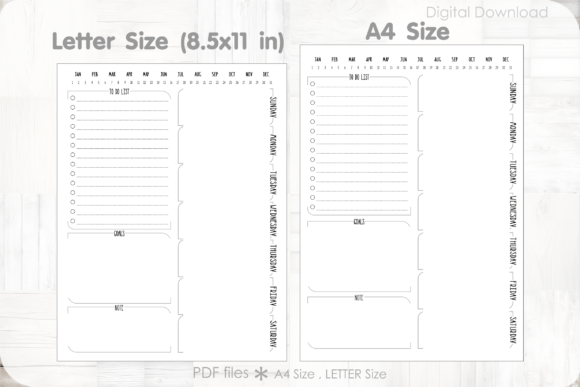
Digital To-Do List Organizer
For designers and creatives seeking efficient tools to streamline their workflow, a Digital to-Do List Organizer is an essential asset. It provides structure, clarity, and focus, allowing professionals to manage tasks with precision while maintaining creative momentum. Whether you're working on branding, editorial layouts, or digital products, integrating a well-designed to-do list into your process can significantly enhance productivity and project outcomes.
In the realm of graphic design, visual communication is key. A Digital to-Do List Organizer serves as more than just a task manager—it's a tool that supports the entire design workflow. From initial concept sketches to final deliverables, having a clear plan ensures that every step aligns with the project's goals and brand identity. This level of organization is especially crucial when working on complex campaigns or multi-platform projects.
Applications in Visual Design
The versatility of a Digital to-Do List Organizer makes it valuable across various design disciplines. For branding and logo design, it helps track milestones, client feedback, and revisions. In marketing materials, it ensures that all elements—from social media graphics to print ads—adhere to a consistent timeline and quality standard. When creating content for websites or UI design, it keeps the team aligned on deadlines and feature priorities.
For editorial layouts, a structured approach ensures that each section of a publication is completed on time without compromising visual hierarchy or readability. In packaging design, it aids in managing the intricate details of mockups, prototypes, and approvals. Similarly, in advertising campaigns, it helps maintain a cohesive narrative across different channels and formats.
Key Considerations for Designers
When selecting a Digital to-Do List Organizer, consider factors such as scalability, ease of use, and compatibility with existing design systems. A tool that integrates seamlessly with your workflow can save time and reduce errors. Additionally, ensuring that the organizer supports collaboration is essential, especially when working with cross-functional teams.
Typography, color, and composition play a significant role in the effectiveness of any design. A well-structured to-do list should reflect these principles, using clear fonts, appropriate spacing, and a logical layout. This not only improves usability but also reinforces the overall aesthetic of your work.
- Choose a format that suits your workflow—digital or printable
- Ensure consistency with your brand’s visual identity
- Opt for high-resolution files for professional printing
Whether you're designing for digital products, web design, or print, a thoughtfully crafted to-do list can elevate your output. By prioritizing tasks, tracking progress, and maintaining focus, you can deliver results that are both visually appealing and functionally effective.
With options like a Minimalist To-Do List Template or a Colorful To-Do List Printables, there's a solution for every creative need. These resources offer flexibility, allowing you to customize your approach while maintaining a professional standard. Whether you prefer a simple notepad or a detailed weekly planner, the right tool can make all the difference in your design process.
Ultimately, the success of any creative project hinges on thoughtful planning and execution. A Digital to-Do List Organizer isn't just a tool—it's a strategic component that enhances your ability to communicate ideas, meet deadlines, and deliver high-quality work. By investing in the right resources, you empower yourself to achieve greater efficiency and creativity in every project.